
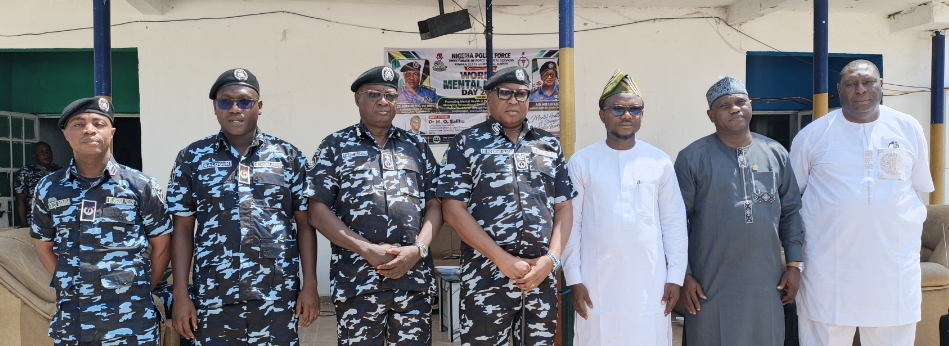
The Kwara State Police Command under the leadership of the Commissioner of Police, CP Adekimi Ojo, has commemorated the World Mental Health Day 2026.
The programme, organized by the Directorate of Force Medical Services, was held at the Police Officers’ Mess, G.R.A., Ilorin.
In his opening address, the Officer-in-Charge of the Directorate, Dr. Abdulquadir Balogun, said the event was aimed at equipping officers with strategies for stress management, peer support, and confidential access to mental health care.
Dubbed “Promoting Mental Health in Policing: Breaking Stigma, Managing Occupational Stress, and Building a Supportive Police Workforce Through Peer Support, Leadership Involvement, and Confidential Access to Care,” Dr. Balogun noted that the initiative was designed to address mental health challenges associated with policing and promote a healthier work environment.
The Guest Speaker, Dr. M.O. Salihu, Consultant Psychiatrist, Department of Behavioural Sciences, Kwara State University Teaching Hospital, Ilorin, highlighted five key reasons police officers often fail to speak out about their mental health and seek help.
According to him, stigma remains a major barrier, as many officers lack the confidence to share their struggles with colleagues. He cited a survey from the United States where three out of four officers would not disclose their challenges to their supervisors.
Dr. Salihu added that over 40 percent of officers believe speaking about their mental health could halt their promotion, while 18 out of 60 fear they might lose their firearms if they seek help.
He identified operational and organizational stress as major stressors, including road hazards, manning highways, inadequate manpower, where one officer does the work meant for five, poor housing, and healthcare challenges
He also said, lack of involvement of officers in decision-making on issues affecting their welfare is also a major barrier.
On peer support, Dr. Salihu said the Nigerian Mental Health Act 2021 protects persons with mental health conditions and prohibits dismissal of personnel on such grounds, urging officers not to be afraid to speak out.
He dismissed the notion that training and therapy do not work, stressing that evidence has shown their effectiveness, urging Officers to indulge in regular exercise.
He further harped on the role of leadership in supporting mental well-being and the need for confidential care.
To maintain good mental health, Dr. Salihu advised officers to prioritize quality sleep of 6 to 8 hours, regular exercise, limit alcohol consumption, and talk to peers often.
He urged the Command to support officers through fair duty rosters, timely payment of allowances, and routine medical check-ups and many more.