
The news of Kwara State Internal Revenue Service placing some high net-worth businesses under lock and key surfaced on news media in and outside the State in the early hours of Friday, 1st March 2024.
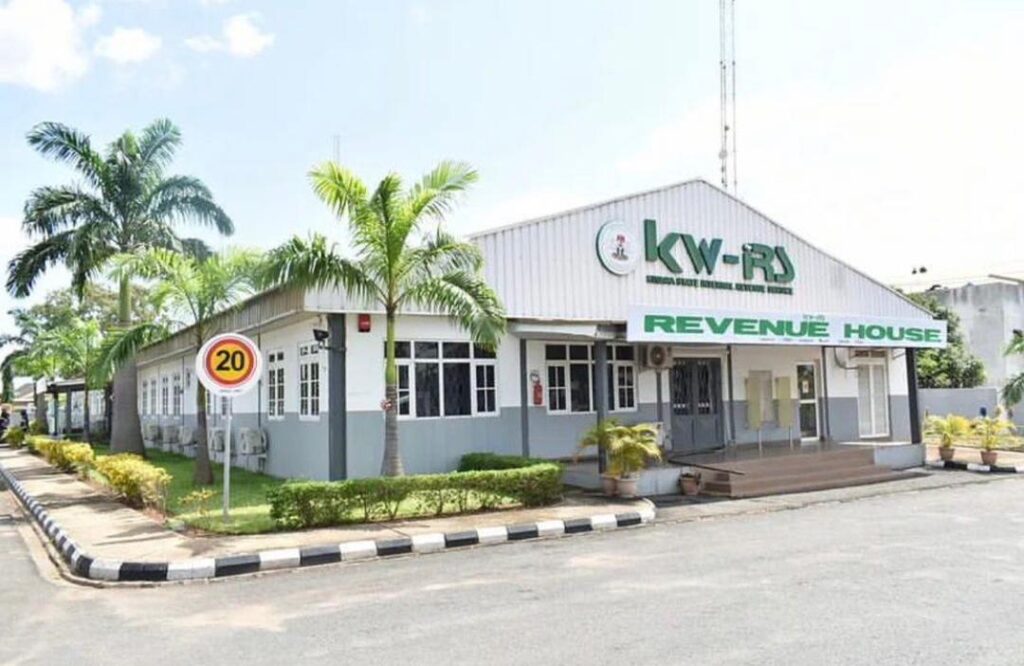
The enforcement exercise according to the revenue agency in a statement released by its news and corporate affairs department the same day, said the exercise prevailed following the institution of a constituted mobile court right within the premises of three identified recalcitrant taxpayers in the State. The mobile court judge according to the agency’s statement found the business owners guilty and ruled that their business outlets be placed under lock and key until they pay their dues as communicated to them.
This singular enforcement exercise has however left questions in the minds of the general public, especially business owners in the State, but a few points of view caught my attention, and need to respond.
First are the opinions of those unfamiliar with tax laws and civic obligations as citizens who have since taken the issue to the media with a twisted narrative and maintained a path they consider favorable. Some even queried the legality of the constituted mobile court and tagged it as lacking equal representatives and fair hearing; others tagged it as insensitive of the agency and lacking moral grounds. Some clans took it further personally and reported it as a formal attack and target on Igbo traders in the State, so many conflicting views and opinions have rocked the exercise the agency maintained to have executed in fairness, and good faith and for the development of the State.
Curiosity without shared bias paves the way for more understanding. As a concerned citizen, I find it worthy to lend my voice on the issue and provide useful and yet layman clarity to it. Following various independent investigations since the issues found their way into the media space with a series of unwitting socio-economic wrongs, it is, therefore, well-meaning to state categorically that based on establishing law and provisions backing revenue court in the State, the court has an unrestricted right to sit anywhere within its jurisdiction and prosecute any case brought before it.
This indicates that the jurisdiction of a revenue court is established across the State and not restricted to its primary base or locations in the State. This provision of the law sets the record straight at once for those seeking clarity on the constitutional entitlement of the revenue courts to have held litigations within the premises of those identified recalcitrant taxpayers in the State. It is legal and constitutional.
Similar fallout orchestrated by those affected in the recent enforcement exercise as narrated to the media are from some fragment claiming that the defaulting taxpayers weren’t given fair hearing or adequate representation during the mobile court trial and as such, tagged the entire litigation process and intention of the agency as somewhat intimidating and attack on a selected tribe in the State. These assertions also attract chuckles.
Again, there are processes in the recovery of tax liability from servicing of various statutory notices on the taxpayer up to the litigation stage as enshrined in extant laws. Similarly, for record purposes, Section 4 of the Kwara State Revenue Court Law gives the revenue court the jurisdiction to sit anywhere in the State. The litigation process against the taxpayers was initiated via an ex parte motion, which by law does not require representation of the other party. Hence, the taxpayers were prosecuted without their legal representation.
Moving forward from various legal citations supportive of the enforcement exercise embarked upon by the revenue agency through the mobile revenue court, one would agree it is clear and safe to say the revenue agency has acted within its domain of establishing laws and any form of encroachment allegation would hold no water in any court of law. This again seems like a simple case of misconception on the part of the defaulters and too much of emotions have been applied while presenting the issues to the 4th estate of the realm and of course, all others who care to listen to their supposed plight.
However, a Yoruba adage says, that when one is wailing, such person would surely see the road. If this misconception and shared ignorance are not quickly nipped in the bud at this early stage, then, it might result in the early groundwork of a tribal and inter-ethnic war song needlessly equipped by Igbo extractions in the State; such that has always embodied harmonious relationship with one another.
On the flip side, on no record should it ever be noted that the media formed part of its endorsement having failed to juxtapose facts surrounding the issue to the general public.
Moreover, how on earth would a sane mind even imagine that the revenue agency that is statutorily saddled with the responsibility of infrastructural and economic development of a State sets out to negatively target a clan or their businesses? Of what yearly financial gains would that amount to for the agency? If businesses do not enjoy the ease in their operations and offer of services to the public, how would they fare? and how would they be able to perform their civic responsibility? The assertion of the agency’s target on Igbo businesses in the State is a highly hilarious and a mere hyperbolic statement.
That being clearly stated, various findings during this report also confirmed genuinely that there are other business owners in the State of different tribes and ethnicities with tax liabilities but own a consistent approach and acceptance of commitment to offset their liabilities as long as they remain in business; surprisingly the revenue agency in its magnanimity always shows understanding and mutual respect for this category of dedicated taxpayers. Such a rare window of opportunity exists and remains open to every business owner in the State- an inventive and rare generosity one would hardly record in other States.
On an ending note, this will form yet another clarion call to every taxable person and business owner in the State that there is a need for all to wake up to their civic responsibility and know unquestionably that taxation has come to live with us. As for business owners in Kwara State, it is time to perceive socio-economic development as a collective responsibility and not for the government only. Taxes are what the government uses for the provision of basic social amenities for all residents, with no special consideration for any tribe, but for the betterment of everybody in the State.
Residents, irrespective of their tribes must join in the revenue mobilization process in any possible way, and lend support to the government, bearing in mind that posterity will judge us all someday.