
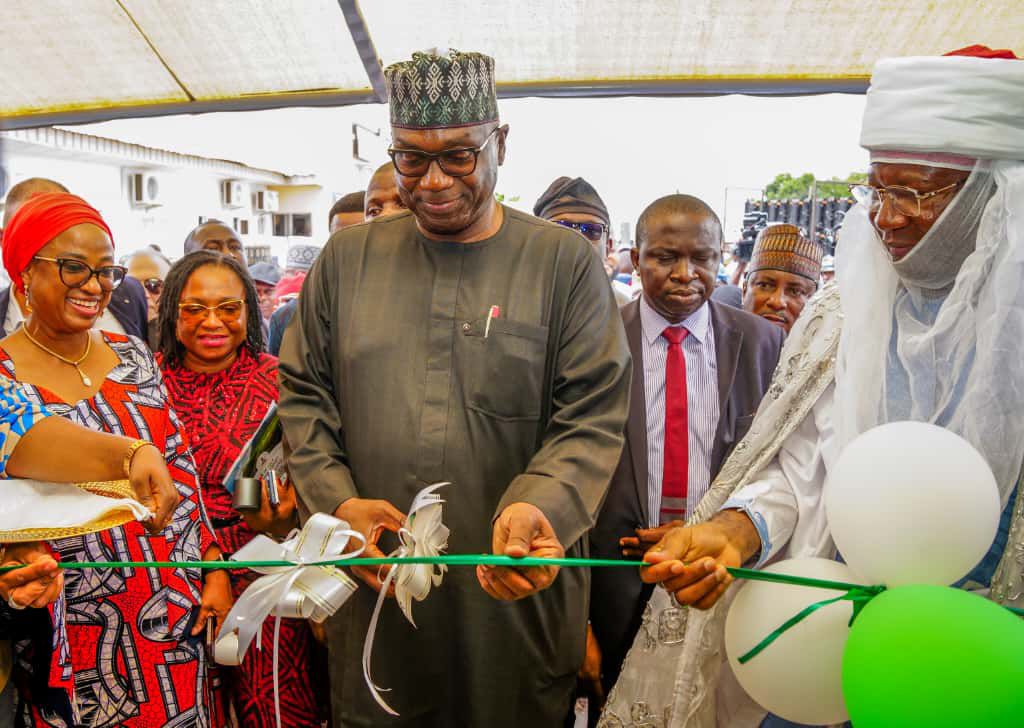
Kwara State has taken a major leap toward digital governance with the launch of an automated land administration system that enables property owners to obtain Certificates of Occupancy (C of O) within two to four weeks once all requirements are met.
Governor AbdulRahman AbdulRazaq announced the development on Monday in Ilorin during the unveiling of the Kwara State Geographic Information Service (KW-GIS) digital land information system.
“Today marks another bold step in our commitment to innovation, transparency, and efficiency in public service delivery,” the governor said. “For decades, land administration in many states, including Kwara, was hindered by manual processes, inefficiencies, and delays that discouraged investors, slowed property transactions, and created room for abuse.”
According to him, the KW-GIS Digital Land Information System represents a complete transformation of land record management in the state.
“It provides a modern, automated, and transparent platform that ensures every parcel of land is digitally captured, documented, and easily retrievable,” AbdulRazaq added.
He explained that the new system would eliminate duplication and loss of land records, shorten the processing time for land titles, enhance revenue generation, and boost investor confidence through secure and verifiable land ownership. The governor described the launch as a milestone in Kwara’s Ease of Doing Business reforms and urged residents and investors to embrace the innovation.
The event drew attendance from top government officials, lawmakers, traditional rulers, industry leaders, trade unionists, and market representatives.
Commissioner for Finance and Chairperson of the Kwara State Ease of Doing Business Council (EODBC), Dr. Hauwa Nuru, described the initiative as positioning Kwara among national leaders in several World Bank–supported programmes, including NG-CARES, SABER, and the HOPE Programme.
“This remarkable progress is a testament to Your Excellency’s unwavering commitment to institutional reforms, accountability, and sustainable development,” she said, commending the council members, KW-GIS team, consultants, and technical partners for their dedication.
Also speaking, the Executive Chairman of the Kwara State Internal Revenue Service (KW-IRS), Mrs. Folashade Omoniyi, said the integration of the KW-IRS online payment system with KW-GIS would deepen transparency and efficiency in land management.
“Investors, titleholders, and the public can now register land, process C of O, obtain building approvals, and make related payments online seamlessly. This reduces bureaucracy, strengthens public trust, and promotes a more transparent governance culture,” she stated.
Omoniyi added that the state had reviewed and harmonized existing land administration laws to align with global best practices, guaranteeing clarity, fairness, and efficiency in property rights and documentation.
In his remarks, the Executive Chairman of KW-GIS, ESV Sulyman Abdulkareem, described the launch as a landmark in the history of land administration in Kwara. He also highlighted the progress made on the Kwara Smart City project, noting that over ₦560 million had been released by the governor as compensation for acquired land.
Project Consultant, Dr. Paul Adepelumi, said the digitalization of KW-GIS sets a new national benchmark.
“KW-GIS is not just a platform; it’s a revolution. It moves us from files to digital records, from delays to speed, and from opacity to transparency,” he said.
Project Manager, Engr. Ali Muhammad Kalot, explained that the digital platform features tools for parcel mapping, data querying, revenue generation, and user access control. He noted that over 200 staff had been trained to manage the new system.
“We have scanned more than 1,000 layouts and digitized about 20,000 land plots. This achievement underscores the government’s commitment to modernization and sustainability,” Kalot added.
With the automation of land administration, Kwara State now joins a growing list of states leveraging technology to improve service delivery, ensure transparency, and create a more investor-friendly environment.